Host desk / physical card room

Host Guidance

The host helps guests settle into a restaurant-based card room, understand the shared table rhythm, and enjoy the evening as an in-person social occasion. Offline poker at The Gamesome Kitchen takes place physically inside the restaurant’s card lounge, with hosted poker sessions shaped around arrival, orientation, and a comfortable pace. Whether it is your first visit or a familiar card evening, the host is there to make the room easier to read.

Plan your session

Use the booking route to plan a restaurant visit and hosted card evening when you are ready.
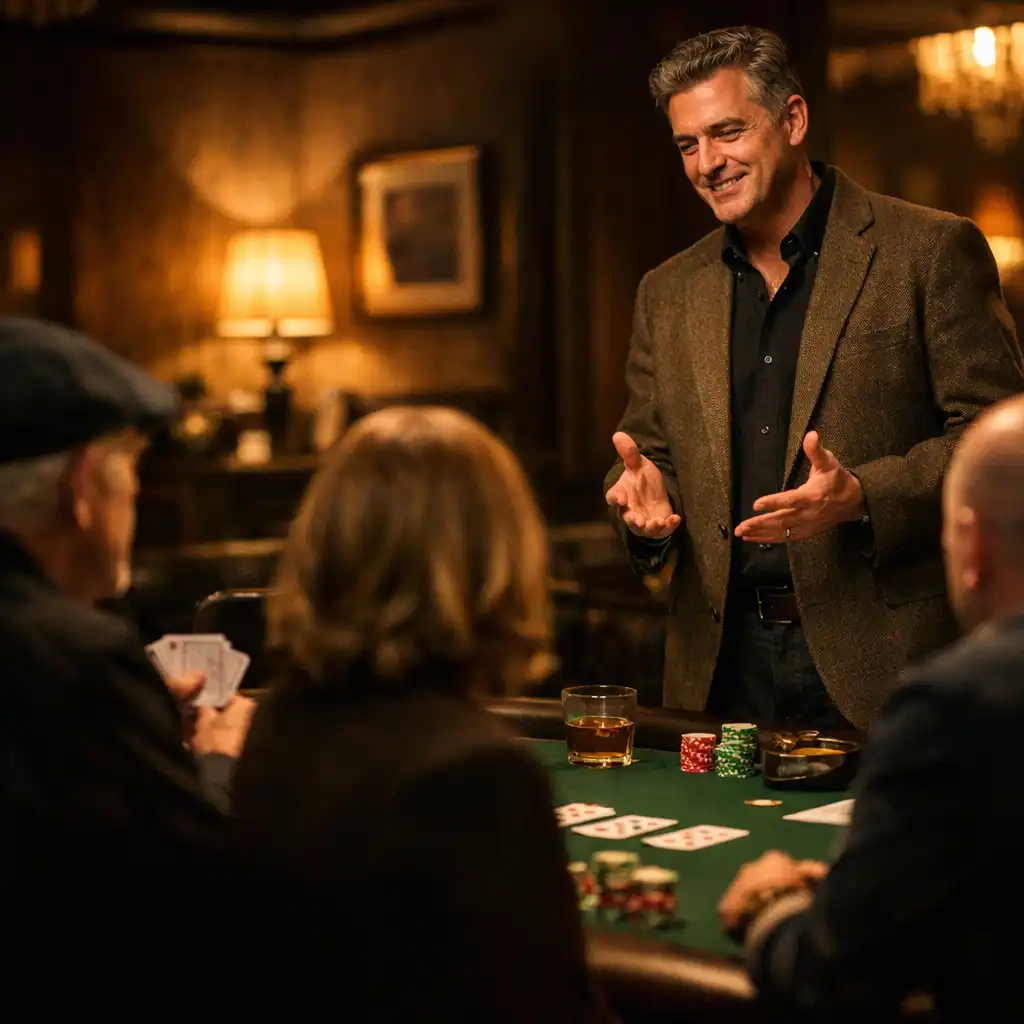
A host briefing guests beside a felt-topped table in The Gamesome Kitchen card lounge.
CARD ROOM / HOST BRIEFING The card lounge is part of the restaurant; hosts orient guests before play begins.
Host remit / floor support

What the host is there for

The hosted format is designed around arrival, a clear welcome, a shared table rhythm, and a restaurant setting rather than an impersonal card session. Hosted poker sessions and in-person card evenings happen inside the restaurant, so first-time and returning guests can treat the host as a practical point of reference while they settle into the room.

01 / Arrival

Welcome and orientation

A host gives guests a practical welcome, helps them find the card lounge, and explains how the evening is broadly arranged. Questions are welcome before anyone settles at the poker tables, especially when the card room or hosted format is new.

02 / Table rhythm

A steady table rhythm

For offline poker, the host helps make the shared pace approachable by clarifying practical table expectations and the group rhythm. Clear communication, an unhurried start, and awareness of others help the physical table feel comfortable for everyone.

03 / Restaurant flow

Room for the restaurant

The host also connects the card room to the wider restaurant visit. Natural pauses leave room for kitchen pairings, drinks, conversation, and movement, so food remains a welcome part of the social flow rather than an interruption.

Session map / guest planning

From plan to close

This is a guest-planning guide, not a fixed timetable. It shows how a hosted evening can move through the restaurant with clear, human touchpoints.

  1. 01

    Plan the evening

    Use the booking route when you are planning a restaurant visit around hosted poker sessions. It is a helpful way to approach the evening without arriving with assumptions, leaving space to think about the kind of in-person occasion you want to share.

  2. 02

    Arrive and orient

    On arrival, the host provides a clear starting point and directs guests toward the card lounge and its shared table setting. Ask practical questions early; a calm welcome makes it easier to understand the room before the evening finds its rhythm.

  3. 03

    Settle at the table

    At the poker tables, the host introduces the social pace and helps the group read the room before cards are in motion. Offline poker is a physical, shared activity, so an unhurried and considerate start gives each guest room to become comfortable with the table.

  4. 04

    Make space for the room

    Throughout the evening, hosts can help guests find natural pauses and stay connected to the restaurant experience. Kitchen pairings, food, conversation, and comfort all belong alongside hosted poker sessions inside the restaurant, rather than sitting apart from them.

  5. 05

    Close the session well

    A good close leaves guests with a clear sense of the evening as a shared, in-person restaurant occasion. It makes room for a considered departure, a last conversation, and the social connection built around the table rather than a transactional finish.

Table-ready / field notes

A considerate card room

These are considerate table habits, not formal tournament rules. They are simple ways to help a host-led table feel welcoming, legible, and easy to share.

Practice / questions

Ask before the table settles

Use the host’s welcome to ask practical questions early, especially if the physical card room or hosted format is unfamiliar. Questions are useful, welcome, and often the easiest way to begin with a relaxed sense of where you are and what the group is doing.

Practice / awareness

Read the shared table

Poker tables work best when conversation is considerate, guests respect the pace of others, and the shared space has room to breathe. Lively talk can be part of the evening while still leaving attention for fellow guests and the rhythm of the room.

Practice / surface

Keep the table clear

Cards and chips are non-financial table props within an organised, host-led setting. Keeping the surface clear, allowing for personal space, and handling shared items carefully makes the experience easier for everyone at the table to follow.

Practice / pause

Take pauses with ease

Short pauses for food, drinks, and conversation are part of the restaurant rhythm. Host guidance can help guests find a natural moment to step away, reinforcing that hospitality and cards belong together during the evening.

Kitchen pairing / table timing

Plan around the kitchen, not against it

Kitchen pairings are part of the planning conversation because a good hosted evening gives guests time to eat, talk, and return to the table comfortably. Hosted poker sessions belong within a restaurant visit, not outside it, so food can add warmth and an easy social rhythm to an in-person evening without turning the room into a rigid schedule.

Before

Think about a moment to arrive, settle, and enjoy the restaurant before the table becomes the focus.

Pause

Use an easy break for kitchen pairings, conversation, and a reset that suits the group’s pace.

After

Let the time after cards make room for food, reflection, and the wider restaurant atmosphere.

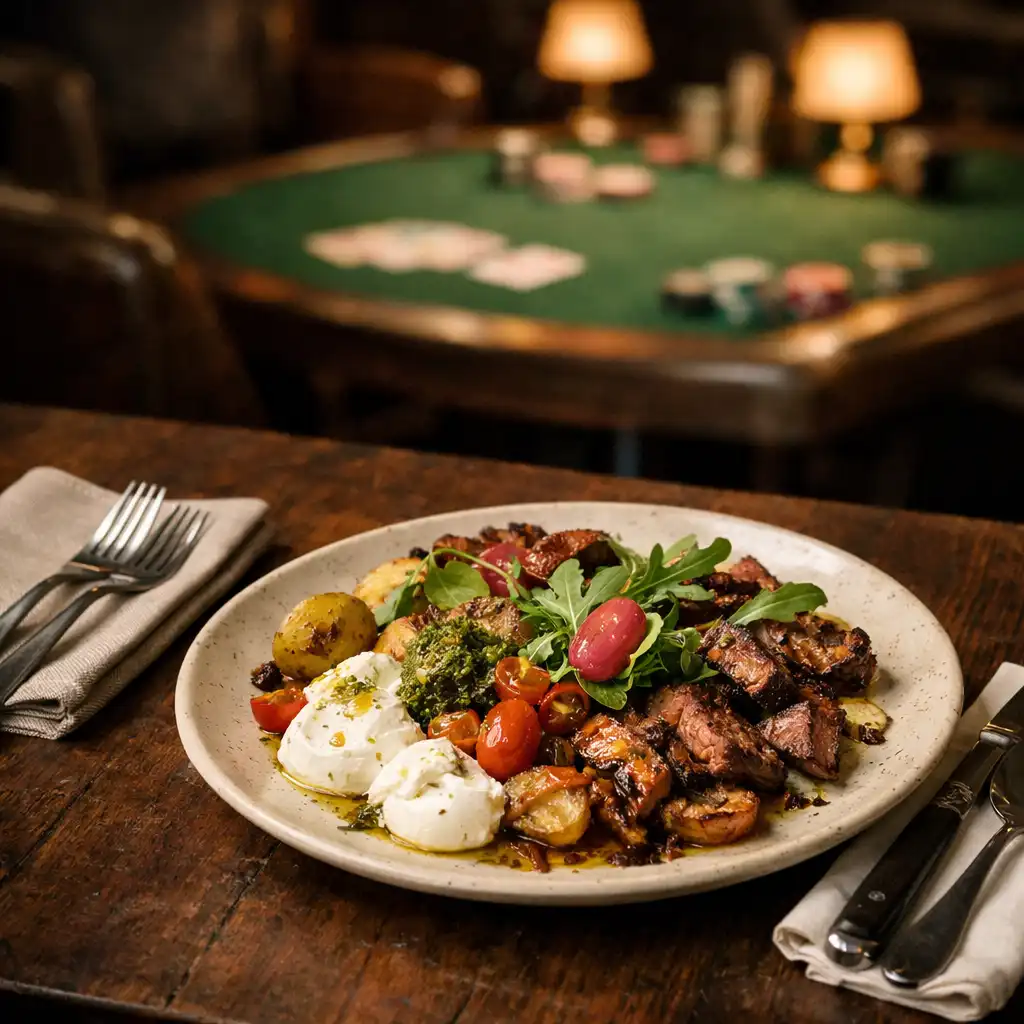
A plated shared dish on a dark restaurant table with card lounge lighting in the background.
KITCHEN / TABLE CONTEXT A food detail sets the atmosphere rather than promising a specific dish. The card lounge remains a social restaurant space, with the host helping the group move easily between table and room.
Private groups / field plan

Hosting a group in the card lounge

Private groups can use a host-led approach to create a clear arrival point, shared table expectation, and restaurant rhythm for their own gathering. If you are organising an in-person occasion, start with the atmosphere you hope to create rather than assumptions about how every moment must run.

01 / Brief

Start with the occasion

Describe the kind of gathering you want to plan, so the visit can be framed around conversation, hosted poker sessions, and the restaurant setting. A clear social intention gives the evening a useful starting point without making the plan feel over-scripted.

02 / Welcome

Give the group a clear start

A shared welcome helps guests understand where to gather and how the card room fits into the wider evening from the outset. That simple first moment can reduce uncertainty for people arriving together and make the physical space easier to approach.

03 / Rhythm

Leave room for the evening

A flexible rhythm gives the group time to sit, play, eat, and talk without treating every moment as a fixed instruction. Poker tables and kitchen pairings can work together when the restaurant pauses remain part of the occasion.

Host principle / hospitality

Calm cues, shared pace

Good hosting balances clear guidance with space for guests to make the evening their own. In the card lounge, a host can be calm, observant, and practical: present enough to make the room readable, without crowding the social experience. That balance keeps in-person card evenings connected to the restaurant, where table conversation, a pause for food, and the energy of the wider room can all remain part of the occasion.

Field note / cues

Make cues visible

Hosts make practical cues easy to find, from where the group gathers to when a pause may feel natural. Clear signals help guests settle without turning a social restaurant evening into a technical exercise.

Field note / pace

Protect the pace

The aim is not to rush the table but to help guests move comfortably between poker tables, food, and conversation. The restaurant-led purpose stays visible when the group can take its time.

Field note / questions

Keep questions welcome

When guests are unsure, a quick question to the host can keep the shared experience easy for everyone. That invitation is practical, low-pressure, and useful at any point in the room.

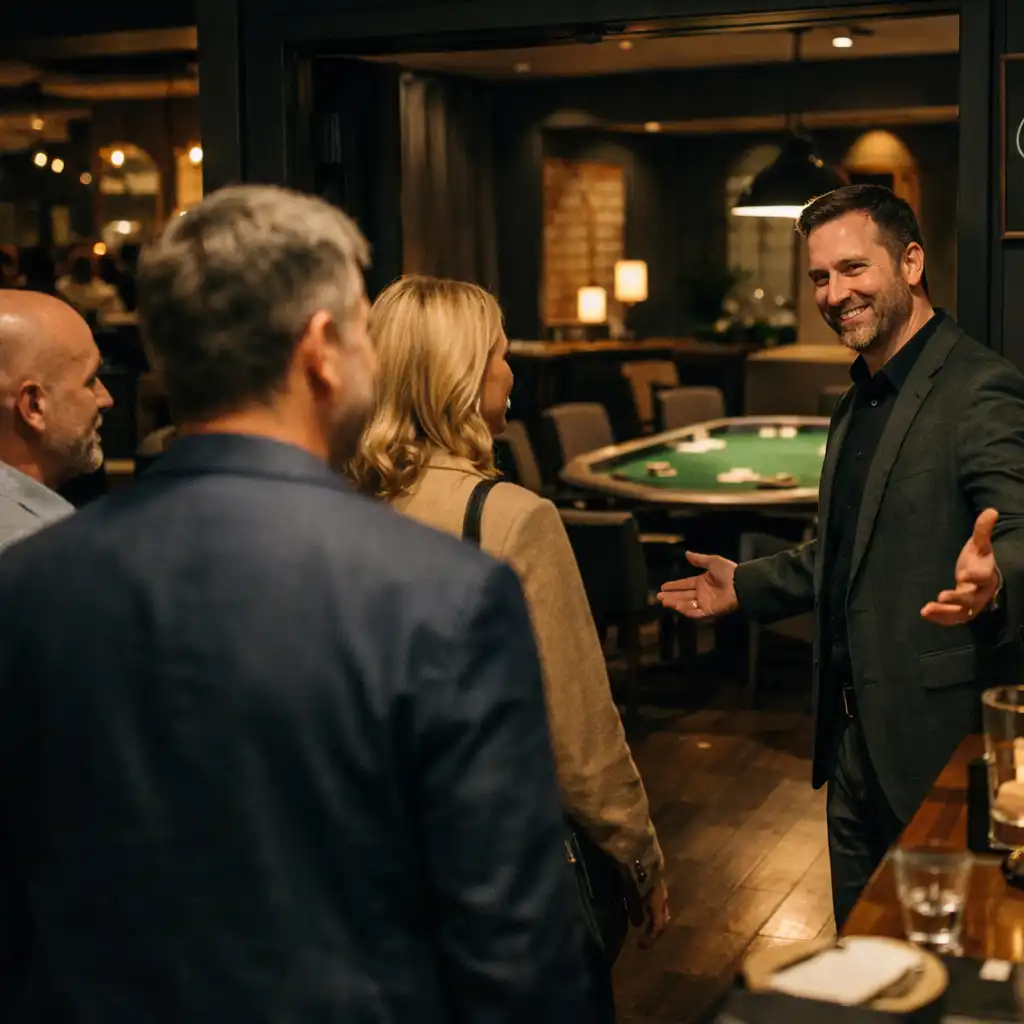
A host welcoming a private group into a restaurant card lounge with prepared tables.
PRIVATE GROUP / ARRIVAL A host-led welcome gives an arriving group a clear first moment in the restaurant card lounge before the wider evening unfolds.
Private groups / next step

Bring the group together

For a group visit, the clearest next step is to plan the restaurant occasion around the kind of hosted card experience the group wants to share. Private groups can approach hosted poker sessions as an in-person, social part of a restaurant evening, with a host-led welcome helping the room feel accessible from the start.

Plan a private group
Clear starting point

Organisers do not need to solve every detail alone; host guidance is there to make the room, the table, and the restaurant rhythm easier to approach.

Quick answers / before you plan

Useful confirmation, kept simple

For visitors who want a concise answer before planning, these notes confirm the physical restaurant setting and the role of host guidance.

Is offline poker held inside the restaurant?

Yes. Offline poker is hosted, in-person activity at poker tables inside The Gamesome Kitchen restaurant card lounge. The emphasis is on a physical, shared card-room setting, with a host helping guests orient themselves and enjoy the restaurant-led occasion.

What if the card room is new to me?

Host guidance is there to help first-time guests get oriented and ask practical questions before settling into the shared table rhythm. Hosted poker sessions are designed as social, in-person occasions, so it is useful to ask when something about the room or format is unclear.

Can the evening include food and conversation?

Yes. Kitchen pairings and social pauses are part of the restaurant-led rhythm around in-person card evenings. Guests can plan for food and conversation alongside the table, allowing hospitality to remain present without relying on a fixed or prescribed schedule.

How do private groups begin planning?

Private groups can begin with a direct planning enquiry, giving the host-led restaurant experience a clear shared intention from the outset. Start by thinking about the kind of in-person gathering you want to create, then use the established booking route to begin planning.

Plan a private group
Closing console / next step

Ready to plan the table?

A hosted card evening at The Gamesome Kitchen can be planned as a physical restaurant visit, with a card lounge setting, hosted poker sessions, kitchen pairings, and room for conversation. Offline poker here is part of an in-person social occasion: a table, a host, and a restaurant environment designed to be approached with confidence and ease.

Plan your session

Use the booking route to begin planning your visit or a private group occasion.