Kitchen / card lounge
Physical table planning

Kitchen Pairings

Food belongs in the rhythm of a hosted poker session, not at its edge. Inside the restaurant, the kitchen and card lounge can be considered as one coordinated visit: a physical table, shared conversation, and offline poker with room for hospitality.

Plan your session

Use booking to share the shape of your in-person evening. Hosts can understand the restaurant visit and card-lounge format you have in mind.

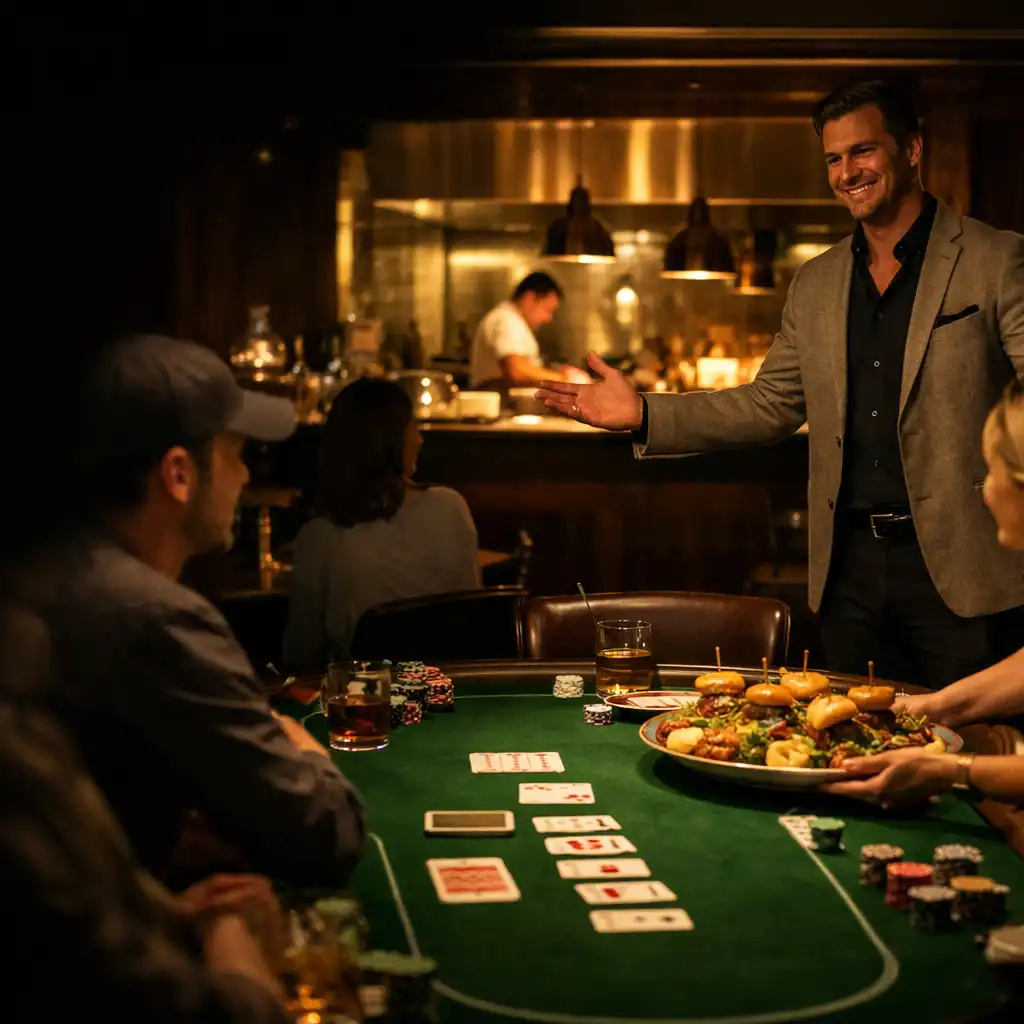
Server placing shared food at a physical card table in The Gamesome Kitchen card lounge
KITCHEN / TABLE PATHRestaurant service alongside a hosted physical card evening.
Flow / service

A kitchen rhythm that respects the room

The pairing approach begins with the rhythm of arrival, hosted play and conversation. Thinking of these as parts of one in-person restaurant visit helps guests describe the atmosphere they want without treating food or cards as separate events.

ArrivalTable rhythmClose
01Arrival

Settle in

Arrival is a chance to settle, meet the host and orient yourselves to the card lounge before the table rhythm develops. A welcome, a little conversation and a clear sense of the room can make a physical hosted evening feel relaxed from its first moments.

02Table rhythm

Keep the table comfortable

During play, practical pairings favour easy conversation and a comfortable shared-table atmosphere around poker tables. Food remains part of restaurant hospitality, while offline poker stays a social, in-person activity rather than the sole focus of the room.

03Close

Let conversation continue

When cards are put aside, attention can return naturally to conversation, food and the close of a restaurant evening. The cards are one physical part of the visit; the final mood can be as much about the people gathered around the table.

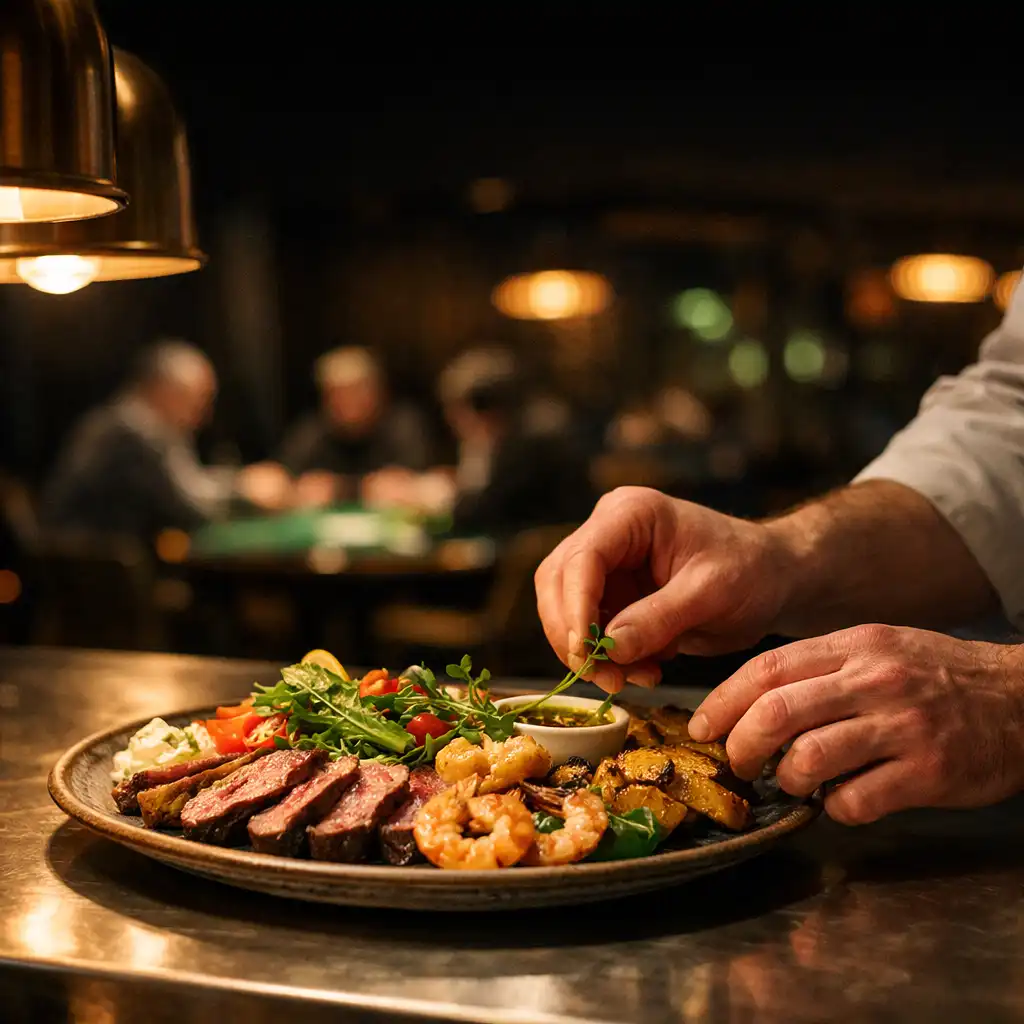
Chef finishing a shared plate at the restaurant kitchen pass
KITCHEN / PASSA service-atmosphere reference, not a current menu listing.
Field note

The pass is part of the evening

Good pairing is less about adding theatre to cards and more about allowing food, conversation and a hosted table to coexist naturally inside the restaurant. The kitchen pass is part of that shared rhythm: a practical point where the room’s atmosphere and service considerations can be held together without turning either into a performance.

For hosted poker sessions or in-person card evenings, the useful question is simply how the group hopes to spend its time together.

Table brief

Start with the kind of evening

Choose the atmosphere first: a focused hosted poker session, a relaxed card-lounge catch-up, or a social in-person card evening where food is part of the conversation. These are visitor intentions, not prescribed packages, and each belongs physically inside the restaurant.

Share table

Plan for conversation

Shared-table thinking can help a group pause, talk and remain present at a physical restaurant gathering. It is useful guidance rather than a rule: consider how you want food and conversation to sit alongside the table’s social energy.

Host brief

Brief the room, not just the table

A host benefits from knowing whether cards are central to the night or one part of a broader get-together. That host guidance gives useful context for a physical poker-table format without promising a particular staffing or table arrangement.

Pause points

Use natural pause points

Pacing food around natural pauses can let guests return their attention to the people at the table rather than treating restaurant service as an interruption. Hosted play and hospitality can share an easy pace without relying on exact rounds or timings.

Request notes

Flag what matters to your group

If you have accessibility, dietary or group-format considerations, you can flag them in your planning conversation so the restaurant can understand the request. Raising a need is an invitation to discuss it, not a promise of a particular outcome.

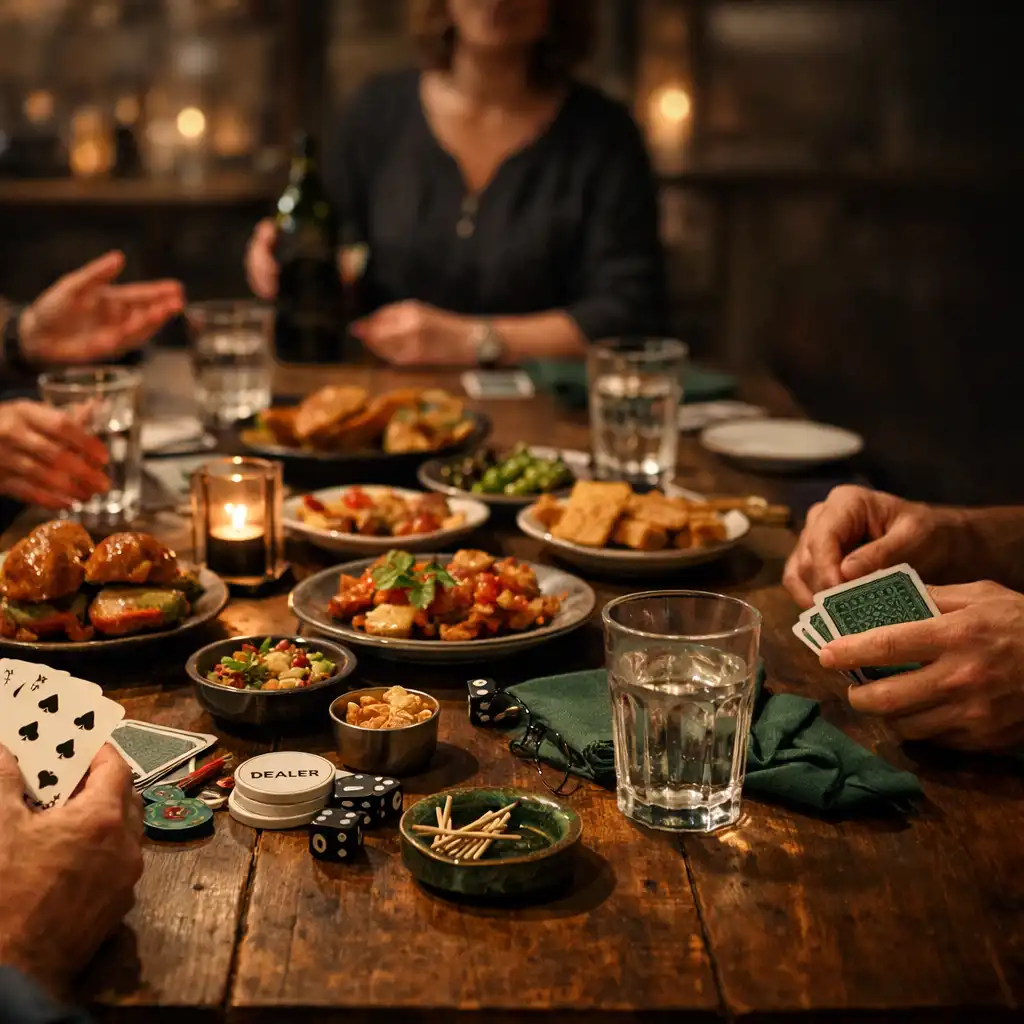
Shared restaurant table with food, conversation and physical cards in the card lounge
LOUNGE / SHARED TABLEA physical card-lounge setting where food, conversation and cards meet.
Room note

A table can carry different moods

The card lounge can hold more than one kind of evening. Guests may come for a focused hosted table, or for a longer meal where offline poker sits naturally beside conversation. Both take place inside the restaurant, and neither needs to turn the room into a casino-like setting.

A useful group prompt

Food-led: let the meal set the tone. Cards-led: make the physical table the main social focus. Mixed evening: leave space for both as part of one restaurant gathering.

Host / kitchen handoff

A clear handoff between room and kitchen

A host can be the human point of orientation for a physical card-room evening, helping guests understand table flow and settle into the restaurant setting. The same broad context can inform how the hosted poker session is approached alongside kitchen service.

01Before the table

Share the shape of the visit

Before guests settle, the most useful details are group intent, the desired atmosphere and whether the visit centres on poker tables or a broader meal. These are planning cues, not a required personal-data checklist.

02At the table

Keep the room readable

Once the evening is moving, small cues and natural pauses can help the hosted table stay legible while restaurant service continues around it. The activity remains in person, with no need to prescribe exact stages.

03Close of evening

Leave room for the close

As a group winds down, a simple close gives guests space to finish conversation and leave the table in a way that feels considered. It keeps the emphasis on hospitality inside the restaurant.

Plan notes

Plan with the room in mind

These practical notes answer common questions before discussing a food-and-cards evening with the restaurant. They are planning guidance for in-person card evenings, not a booking form or a list of fixed service promises.

Begin with the broad shape of your visit. You might mention whether a hosted poker session, the card lounge, food, or a balance of all three is central to the conversation. It can also help to describe the atmosphere you hope for: quieter and focused, or more social and meal-led. In a booking conversation, that context gives the restaurant a clearer picture of the physical gathering you are considering without assuming any arrangement is already in place.

Private table brief

For groups planning a longer table

Private groups may want the restaurant visit to feel more intentional, whether the table begins with food, moves into a hosted poker session, or keeps both in balance. The useful starting point is the experience you hope to create together in the physical restaurant, not a fixed product or promise of availability.

Occasion

Share the broad reason for gathering, in plain language.

Table mood

Describe whether the room should feel focused, social or somewhere between.

Evening focus

Say whether the meal, poker tables, or an in-person card evening with both is central.
Service console / readout

A final readout

This page is a planning lens. Use it to think through the physical room, social tempo and food conversation before booking a hosted, in-person restaurant visit in the card lounge.

Restaurant setting

Setting

The venue is a restaurant first, with food and hosted card-room activity occurring in the same physical setting.

Hosted format

Format

Offline poker and cards are hosted, in-person table activity rather than remote play.

Table intent

Intent

Food planning starts with whether a physical table feels meal-led, cards-led or socially mixed.

Room context

Context

Card lounge and host context can help the restaurant understand a group’s desired pace and atmosphere.

Group note

Groups

Private groups can use booking to begin a conversation about their occasion and shared-table experience.

Next stepReady to plan

Next step

The marker means you have a clear next action, not that a session is confirmed. Bring your intended in-person card evening to booking.

Book a table
Plan your table

Plan the table, then let the evening find its rhythm

Bring the restaurant, card lounge and group intent together in one booking conversation. Whether hosted poker sessions or an in-person card evening suit your group, a clear brief is a helpful place to begin.

Context

All card activity described here refers to hosted, in-person experiences inside the restaurant. Use booking to discuss the restaurant visit and physical card-lounge gathering you are planning.